
Towing Through Van Reenen’s Pass: What the Wind Warnings Actually Mean
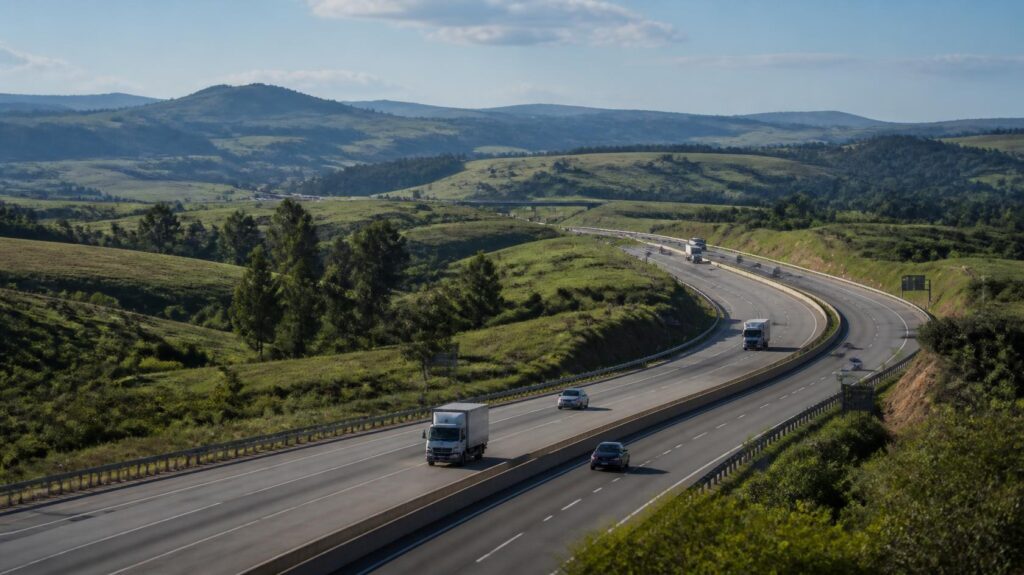
If you’ve ever towed a caravan between Johannesburg and the KZN coast, you’ve driven through Van Reenen’s Pass — the stretch of the N3 that climbs and drops between the Free State and KwaZulu-Natal, near Harrismith and Ladysmith. And if you’ve done it more than once, there’s a decent chance you’ve felt the wind try to push you sideways at some point along the way.
This isn’t bad luck. It’s the terrain.
Why this specific pass is a wind hotspot
Mountain passes act like funnels. When wind moving across open, elevated ground gets squeezed between higher ground on either side, it accelerates — the same effect that makes wind stronger between two tall buildings than in an open field. Van Reenen’s sits in exactly that kind of terrain, which is why it shows up so often in traffic reports and road authority warnings, particularly during the windier months.
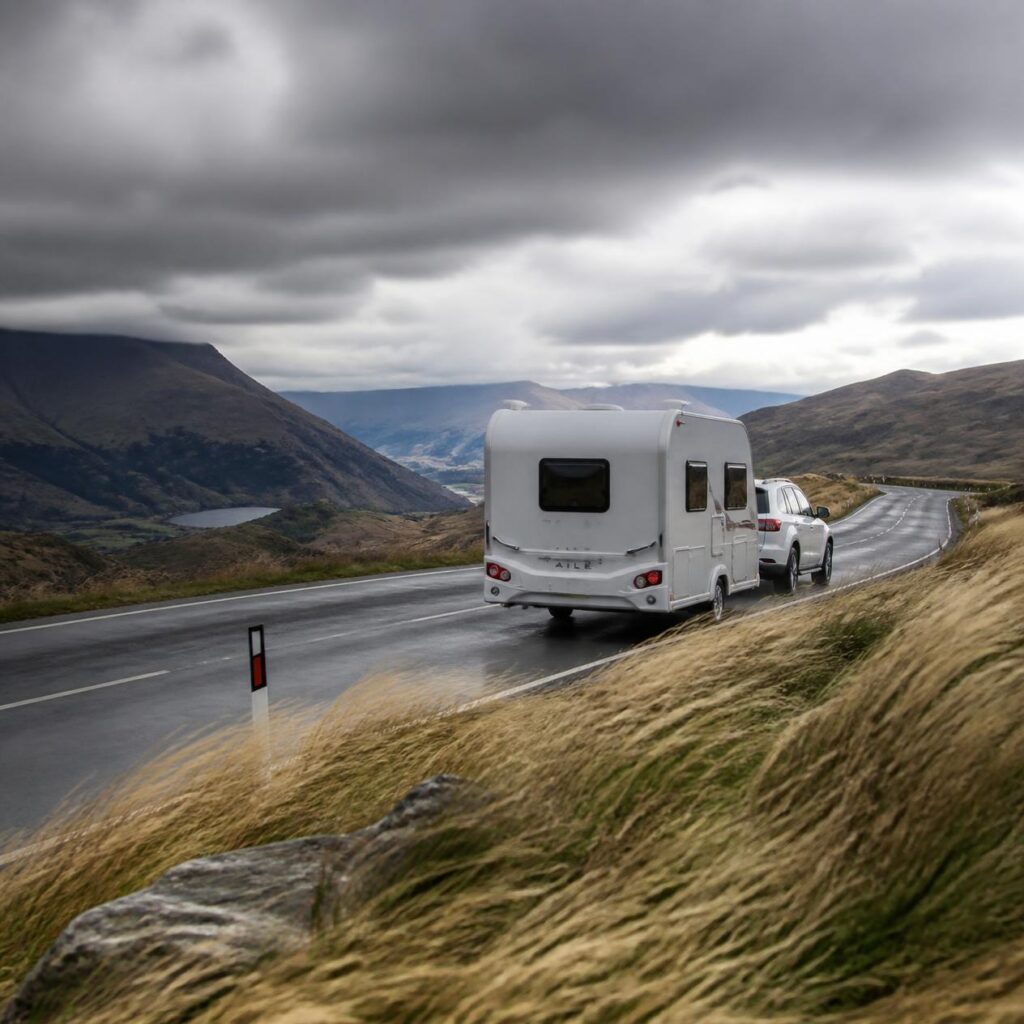
Road authorities have repeatedly flagged sustained crosswinds on this stretch exceeding 70–100 km/h, strong enough to prompt temporary traffic control measures. For a car on its own, that’s uncomfortable. For a car towing a caravan — with a large flat side panel acting like a sail — it’s a genuinely different level of risk.
Why a towed caravan reacts differently to wind than your car does
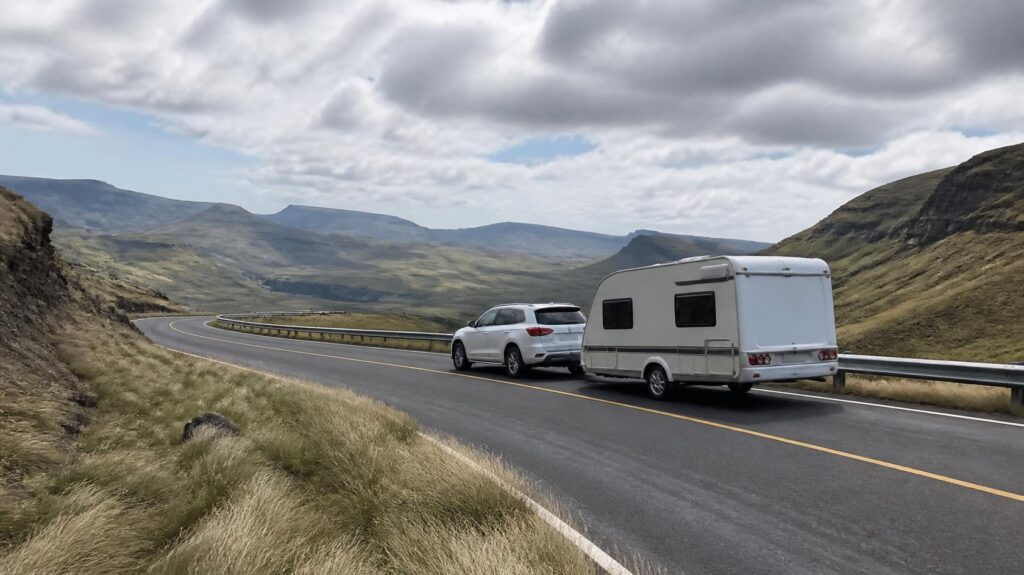
A caravan’s high, flat sides catch crosswind in a way a car’s body doesn’t.
Combined with the leverage of the tow hitch, a strong gust can start a sway that builds on itself if it’s not corrected properly. This is exactly the mechanism behind most caravan-related incidents on exposed passes — not driver error in the usual sense, just physics that most drivers haven’t had to manage before.
What to actually do if you’re caught in it
- Ease off the accelerator, don’t brake hard. Sudden braking while swaying can make the sway worse.
- Hold the wheel firmly with both hands and resist the urge to oversteer into the sway — small, steady corrections work better than sharp ones.
- If your tow vehicle has electronic sway control or trailer stability assist, know how it behaves before you need it — test it (gently) somewhere low-risk, not for the first time mid-pass.
- Slow down before the exposed sections, not during them. Once you’re in open crosswind at speed, your options narrow fast.
- Check the wind forecast before a trip that crosses the pass, the same way you’d check for rain — it’s a genuinely useful pre-trip habit for this specific route.
The bigger picture
None of this means avoid the route — it’s the only realistic way between Johannesburg and most of KZN. It just means treating Van Reenen’s the way experienced tow drivers already do: with a bit more speed margin, a firmer grip, and a quick weather check before you commit to the climb.