
With Fuel Prices On The Rise , What Does Towing Your Caravan From JHB to DBN Really Cost?
Most caravan owners can tell you the price of diesel. Few have actually sat down and worked out what towing a caravan to the coast and back adds to a Durban holiday — in rand terms, per trip, per year. The number is bigger than it feels at the pumps.
trip, per year. The number is bigger than it feels at the pumps.
Towing a caravan the full 1,200 km Johannesburg–Durban return trip costs approximately R3,960–R4,680 in fuel alone, depending on your vehicle. But if your caravan is stored at Oasis, just off the N3 near Camperdown, only the last 120 km near Durban needs to be towed at all — the rest of the trip is driven light. That single change in where the caravan sits on the route cuts the towing fuel bill by R1,134–R1,296 every return journey.
Do six or seven Durban trips a year, and that’s a saving of R7,000–R9,000 a season — on top of the reduced wear on your tow vehicle and the hours you get back not driving a loaded caravan over 1,000 km of N3.
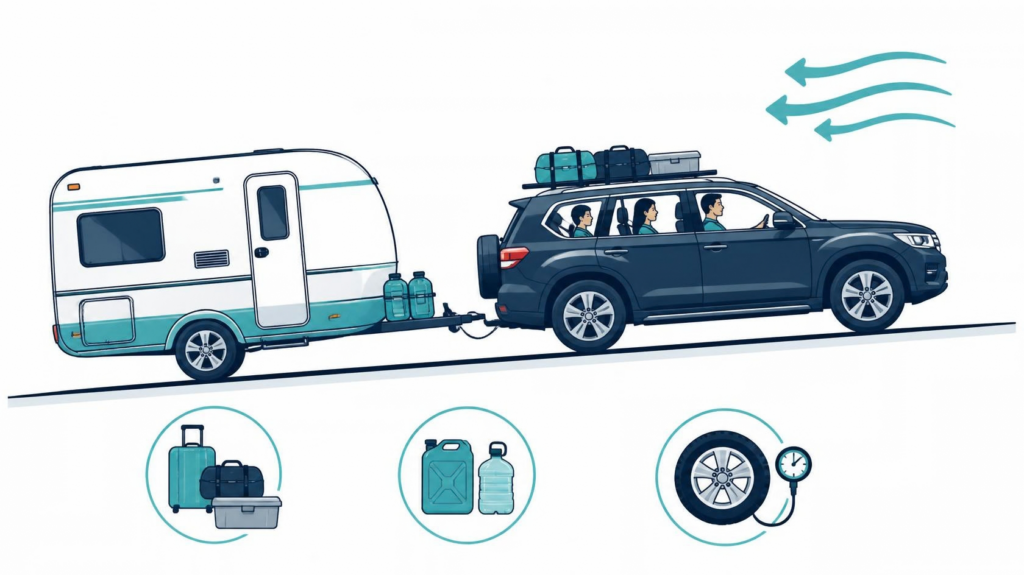
The basis of this comparison
- Full route distance: 600 km each way, 1,200 km return, Johannesburg to Durban.
- Oasis location: Deeside Farm, off the R603, Umlaas Road — 5 km off the N3, roughly 60 km from Durban. This sits near the Durban end of the route, so the trip splits naturally rather than requiring a separate side journey.
- Caravan: approximately 1,500 kg fully loaded, including luggage and equipment.
- Travellers: the same passengers and luggage in both scenarios.
- Diesel: R30/litre, used as a budgeting assumption — actual forecourt prices vary by station. Fuel-price reference
- Figures exclude local driving, campsite fees, and vehicle wear.
1. Three popular towing vehicles
Representative examples across the vehicle categories caravanners commonly drive — not a ranking of the most-used vehicle on the route.
| Category | Vehicle | Engine | Manufacturer’s untowed consumption |
|---|---|---|---|
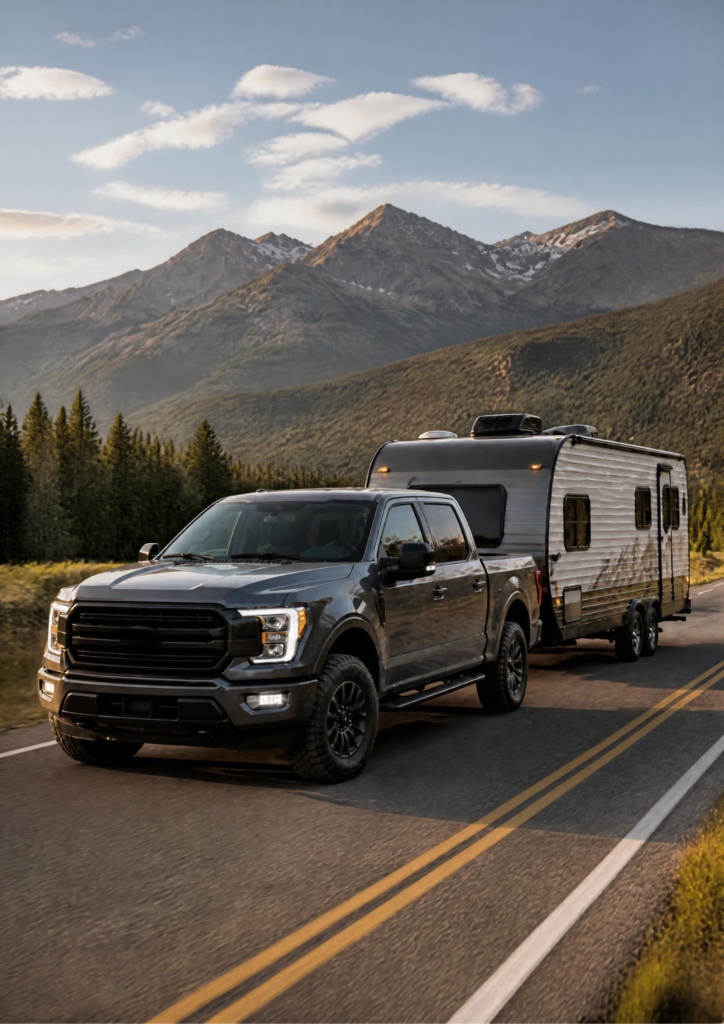
| Medium SUV | Volkswagen Tiguan 2.0 TDI 130 kW 4MOTION DSG (2020 Highline) | 2.0-litre turbo-diesel; 130 kW, 380 Nm | 6.4 L/100 km |
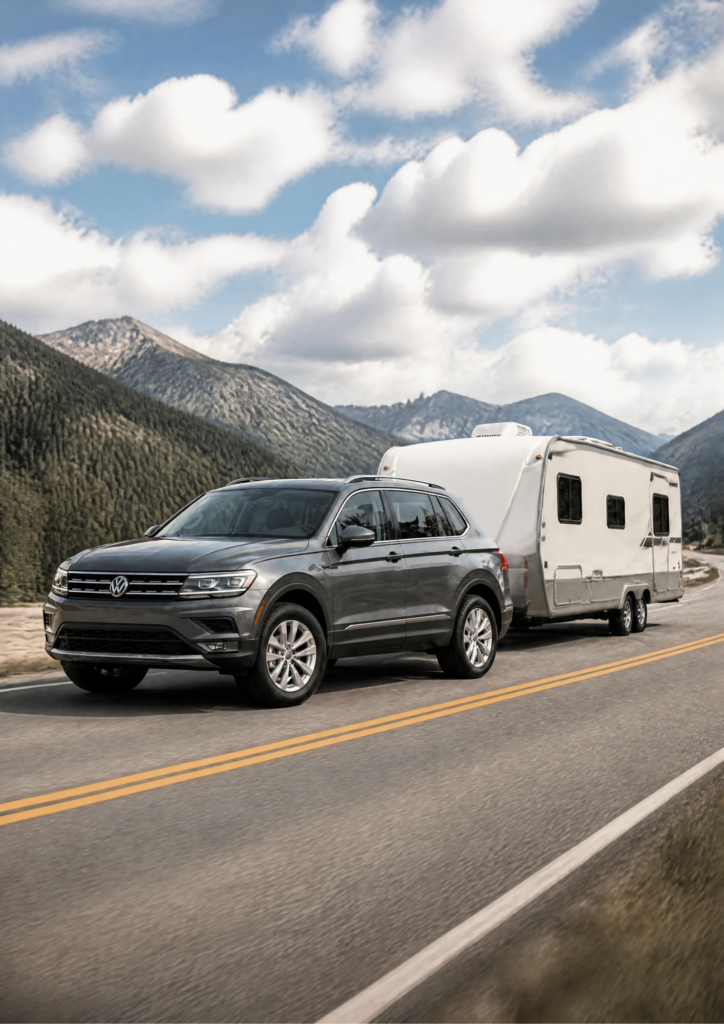
| Large SUV | Ford Everest 2.0 Bi-Turbo 4×4 (2023–2025) | 2.0-litre twin-turbo diesel; 154 kW, 500 Nm | 7.5 L/100 km |
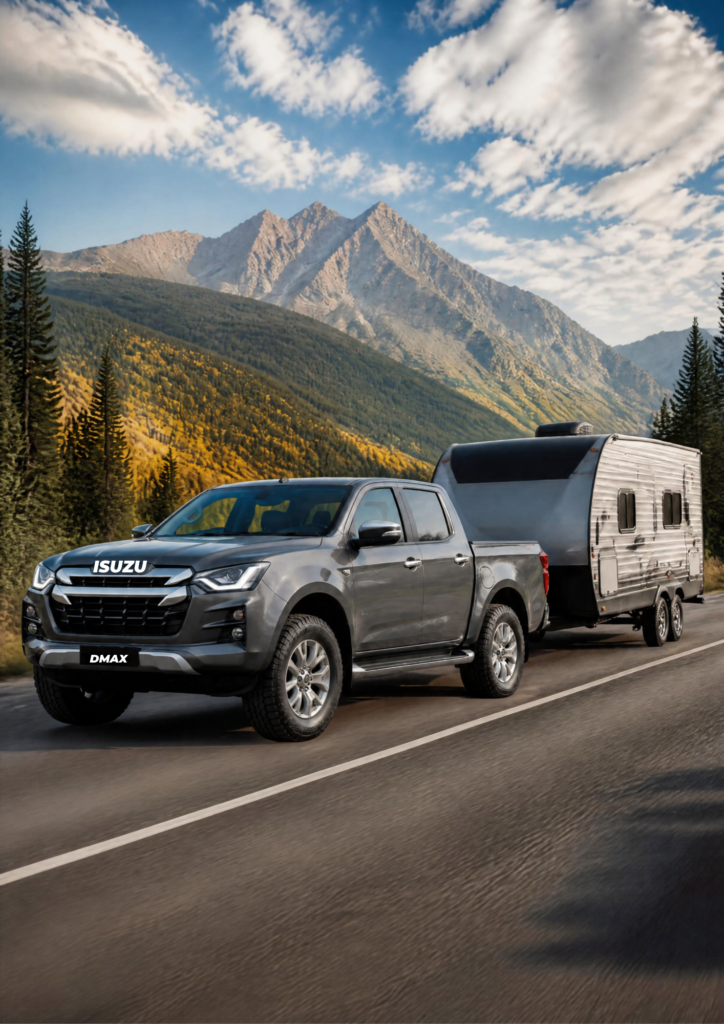
| 4×4 bakkie | Isuzu D-MAX 3.0 Ddi LSE 4×4 automatic double cab | 3.0-litre turbo-diesel; 140 kW, 450 Nm | 7.9 L/100 km |
Sources: Volkswagen SA brochure, Ford SA brochure, Isuzu specification sheet.
Manufacturer figures are laboratory benchmarks — the numbers below use higher, more realistic allowances for a loaded holiday vehicle.
What real-world towing tests show: Practical Caravan measured approximately 9.8 L/100 km towing with a related Tiguan diesel 4MOTION variant. GoRV measured 7.54 L/100 km solo versus 16.28 L/100 km towing a much heavier (~2,500 kg) caravan with an Australian D-MAX. An older Everest Bi-Turbo test returned 9.5–10.5 L/100 km towing a camper trailer. Different vehicles and trailers — but they all point the same way: towing hits fuel economy hard. Tiguan test, D-MAX test, Everest test.
2. The full-tow fuel bill
| Vehicle | Without caravan | With caravan | Fuel cost return, towing (1,200 km) |
|---|---|---|---|
| VW Tiguan | 7.5 L/100 km | 11.0 L/100 km | R3,960 |
| Ford Everest | 9.0 L/100 km | 13.0 L/100 km | R4,680 |
| Isuzu D-MAX | 8.5 L/100 km | 12.5 L/100 km | R4,500 |
Every additional 1 L/100 km adds R360 to the return trip at this distance and fuel price — a heavier caravan, a headwind, or a few extra jerry cans of water can push that number up fast.
3. Splitting the trip at Oasis
Here’s the segment that changes everything. Oasis sits just 5 km off the N3, about 60 km from Durban — near enough to the coastal end of the route that the journey splits naturally instead of requiring a separate detour.
| Segment | Distance | Towed? |
|---|---|---|
| JHB → Oasis | 540 km | No |
| Oasis → Durban | 60 km | Yes |
| Durban → Oasis (return caravan to storage) | 60 km | Yes |
| Oasis → JHB | 540 km | No |
| Total | 1,200 km | — |
4. Fuel cost, segmented
| Vehicle | JHB↔Oasis, untowed (1,080 km) | Oasis↔Durban, towed (120 km) | Total, storing at Oasis |
|---|---|---|---|
| VW Tiguan | R2,430 | R396 | R2,826 |
| Ford Everest | R2,916 | R468 | R3,384 |
| Isuzu D-MAX | R2,754 | R450 | R3,204 |
5. The real comparison: tow the whole way vs. store at Oasis
| Vehicle | Fuel: tow the whole way | Fuel: store at Oasis | Fuel savings per trip |
|---|---|---|---|
| VW Tiguan | R3,960 | R2,826 | R1,134 |
| Ford Everest | R4,680 | R3,384 | R1,296 |
| Isuzu D-MAX | R4,500 | R3,204 | R1,296 |
6. What else towing costs you — beyond fuel
| Factor | Effect on fuel use |
|---|---|
| Caravan weight | More energy required to accelerate and climb hills — use loaded travelling weight, not empty. |
| Luggage and equipment | Awnings, batteries, bicycles and camping gear all add mass, wherever they’re packed. |
| Water | Each litre adds roughly 1 kg; a 100-litre tank adds about 100 kg. |
| Wind resistance | A caravan’s height, width and shape increase drag; roof boxes add more. |
| Headwinds and speed | Higher air speed over the combination increases drag substantially. |
| Hills and driving style | Climbing, overtaking and stop-start traffic all increase consumption. |
| Tyres and maintenance | Incorrect pressures, poor alignment or dragging brakes increase resistance. |
None of this shows up on a fuel receipt as a single line item — it’s spread across a slower trip, more wear on tyres and brakes, and 1,080 fewer kilometres of towing a tow vehicle never has to do.
7. Add it up over a season
| Return holidays per year | Tiguan: fuel saved | Everest / D-MAX: fuel saved |
|---|---|---|
| 1 | R1,134 | R1,296 |
| 3 | R3,402 | R3,888 |
| 5 | R5,670 | R6,480 |
| 6 | R6,804 | R7,776 |
| 7 | R7,938 | R9,072 |
If you’re doing five, six, seven coastal trips a year — which many Durban regulars do — towing the full distance is quietly costing you thousands of rand a season, on top of the ordinary running costs you’d have anyway.
There’s a simpler option: don’t tow it all the way
Store your caravan at Oasis Caravan & Boat Storage, on Deeside Farm just off the R603 at Umlaas Road — 5 km from the N3 and roughly 60 km from Durban. You collect it near the coast, tow it the short distance to your destination, and return it to Oasis on your way home. The long haul from Johannesburg is driven light, every time.
At R640 a month — R7,680 a year — storage pays for itself in fuel savings alone at around six return holidays a year, and that’s before counting the time, tyre wear and stress that 1,080 fewer towed kilometres removes from every trip. For Johannesburg caravan owners who holiday at the coast regularly, storing at Oasis isn’t just more convenient — the numbers back it up too.